The urban life blogs that I came across to complete activity nine were as follows:
The First blog which was http://www.urbanlifeblog.com/ that is based in Phoenix, Arizona that pertains to the real estate market as well as the rental investment market in the greater Phoenix area as well as a life blog. The business partners that upkeep the website call themselves the “The Urban Team” that focus on updates on reviews for restaurant and business particularly in downtown/central Phoenix area.
The second blog that really intrigued me was http://www.urbantravelblog.com/ which tells of a traveler named Stuart Wadsworth who in his free time visit areas of central and Eastern Europe, the Middle East and North Africa. The newest blog on the link posted April 26th 2010 featured his revisited to the city of Lviv in Ukraine. This particular city has ruins that compile a great mix of Russian, Polish and Austrian influences and Wadsworth captures the everyday functions of the historical remains such as Dominican Cathedral and Latin Cathedral. The architecture of the churches reminded me on our group tours in the Lower East Side of Manhattan where we were shown the only Polish Cathedral in New York City Metropolitan area.
The third blog I came across was http://veggiegardenblog.blogspot.com/ which was one of my favorites! The blog featured very beautiful photographs of forestry, flowers and home gardens. The purpose was to show people how to conserve our spaces and how to cultivate freshly grown food in our very backyards, again, this blog reminded me of the community gardens of Sixth Avenue and Avenue B area of Lower East Side Manhattan. People are investing their time into harvest crops as well as provide very helpful and simple hints as to how you can also do the same.
http://reinventingtransport.blogspot.com/ was the fourth blog I came across that boasts of reinventing urban transport. This blog basically featured a book that can be viewed or downloaded with the provided link. The blogger also included that “the purpose of this guide is to introduce urban transport issues to a wider audience than just professional transport planners and experts”. The book is making the effort to aware community organizations, journalists and decision-makers about the basics of urban transport. I recall the zoning laws of New York in the Williamsburg area of New York which affects its residents concerning the construction of a waterfront which will indefinitely affect urban transport.
The fifth and final blog that caught my eyes was http://www.urbansketchers.com/p/about-this-blog.html that features sketches of the stories of artists featured in more than 30 countries around the world. Illustrators, architects, web developers and graphic designers alike all share their passion for drawing of the buildings, surroundings and people etc. on location. There is a colossal and beautiful drawing of the city of Málaga, Spain just to give mention of attention to detail by the artist. I can only imagine how each traveler was a flaneur on a regular day and was motivated by what was in their immediate viewing and took the time to record exactly what they have seen in urban spaces and places. I was very moved to post my comment on this blog consequently.
Finally, as I have critiqued on these various blogs, I am leaving my blog for any interested person(s) to do the same on mine which is http://sohoflaneurs.blogspot.com/ Share your common interest, concerns on what my group members and I have experienced as we explored the Big Apple and provided feedback! Appreciated! Enjoy!!!
Wednesday, April 28, 2010

Sunday, April 25, 2010
Activity # 9- Nicole McGuire
Nicole McGuire
Activity 9
As I began my search looking for other blogs that discussed urban life, the first blog I found was http://urbanplacesandspaces.blogspot.com/ . This blog basically discusses urban mobility within the Washington, DC area. Richard Layman (the creator of this blog) discusses the zoning updates, having a very own bicycle station, project with public spaces, streetcar technology, and anything dealing with getting the people around the city. This relates to our blog because we did a lot of these activities when we went on our scavenger hunt for activity # 4. We had to search for zoning laws, how the bicycle lanes and traffic lanes connect, and look for old streetcar trolley tracks. Also in Activity # 3 we had to search for public v. private spaces. It seems that in any urban place there are going to be a lot of the same problems and issues. No matter if you are from New York City or Washington D.C.
The second blog I found was http://urbanvista-boston.blogspot.com/ . As I was reading this blog it showed that this person was trying to show the different parts of the city of Boston. This person had great pictures of what Boston looks like in the spring and winter. This person than gets into the discussion about the Industrial part of the city which I found really interesting because it made me think of Kunstler’s term “frontier neighborhood”. It seems as if the neighborhood is in the middle of a developing area and the neighborhoods become separate. In the person’s last post, I found it very interesting that he/she was discussing New York City and described it as the “ultimate urban vista”. The pictures this person took of the buildings in New York shows the urban landscape and what makes New York one of the most urban places to be.
The third blog http://urbanblink.blogspot.com/ , showed different images of New York City. I thought it was very interesting because it captures all the different elements of New York that makes it so urban. The different holiday decorations placed on buildings, the Chestnuts being made on nut carts on the corners of streets, the old newsstands, the scaffoldings, the graffiti on buildings, and also the capture of the skylines. This person also shows pictures of some of the most important spots in NYC such as 125th St. in Harlem. It captures the constant movement of the city and how the city never sleeps. In this blog http://nyportraits.blogspot.com/, there were pictures of NYC also and these pictures show the different lives people live. There was actually a picture of a community garden in alphabet city which relates to the field trip our group took with our guide Johanna. She took us through the East Village and Alphabet city and showed us around the different parts. In this blog there was a photo of the Polish President and his wife who passed away from the horrific plane crash in front of the church, and Johanna informed us of that being the only Polish Catholic Church still around. This relates to our blog because we have actually gone through the East Village and were informed about these facts before I even found this blog.
In the 5th blog I found, http://vanishingnewyork.blogspot.com/, discusses how New York is slowly vanishing. The old buildings are being torn down and being replaced by huge apartment buildings, movie theaters, parking lots, etc. There was also a discussion about the President arriving in Cooper Union which our group also visited this historic place during our field trip. Astor Place is even where we all met up for our trip and that was one of the places the media was located. This blog shows how New York City is changing either for better or for worse. This relates to our blog because we have actually visited the East Village before, and I have not realized how historic the East Village really is. It’s sad to know that New York City is being replaced by all these new images that people are slowly forgetting how NYC came to be known as one of the most urban cities in the world.
On all of these blogs, I have left a comment on some of the entries and I have discussed how there entries are related to our class and to the different activities we have done throughout the semester. Some of the entries in these blogs were also somewhat similar to what we had to discuss in our blogs. On these 5 blogs I have found I have left our link to our blog and wrote comments such as this one “I found this entry to be very interesting. I did not realize that the President visited Cooper Union. I actually visited Cooper Union for the first time about two weeks ago and I did not realize how historic the East Village really is. I've lived in New York my whole life, and it's sad to say that NYC really is vanishing slowly. I'm in an Urban Studies class, and we are discussing all the different elements that makes a city urban. We also go on all these different activities that deal with going to different places around New York and experiencing new things. If you could please check out my blog http://sohoflaneurs.blogspot.com/ , and read some of our entries you will see all the different activities we do and all the interesting things we never knew about our own city! Thanks!” on http://vanishingnewyork.blogspot.com/. Hopefully other bloggers will read some of our interesting entries and be able to relate to our experiences.
Tuesday, April 20, 2010
Tamon Charles-Activity # 8


Activity # 8
It was a beautiful sunny day for the meeting up of two excited groups from our Urban Life class in order that we participated in two tours in two different boroughs. Sunday April 11th at 1pm was the designated date and time for the ladies of “SoHo Flaneurs” as well as “Urban Fever” to assemble near the cubical structure at Astor Place in the East Village. Our group; the “SoHo Flaneurs” were responsible for the first tour in the East Village that was lead by Johanna, whilst “Urban Fever” covered the DUMBO area of Brooklyn.
Our immediate places of interest that I recalled will waiting on our group members included the private Cooper Union University to our left and a Starbucks to our right. We started our exploration on St. Mark’s Place which had some very interesting boutiques, restaurants (I remembered one that served vegetarian cuisine), as well as an amusing outdoor vendor who meant business as he tried to persuade all passers by to purchase bracelets and sun glasses. There was much representation of various European cultures in some of the authentic restaurants as well and these spots were quite filled with citizens that were out enjoying their lunches in the lovely weather.
As we walked and talked we came to the end of street at Avenue B to Tompkins Square Park which was crowded with many people engaged in different activities. Some couples enjoyed each other’s company laying in the grass and soaking up the sun while others were taking a stroll holding hands. To the far left of the park was a gated area that was a mini dog park for pets to also enjoy themselves without the contraption of a leash but with their owners standing closely by and conversing without other owners. Leaving Tompkins Square Park, we headed towards the community gardens that the area had also contained for the purpose of neighbors coming together and taking turns to maintain freshly grown fruits and vegetables. Johanna also informed us that the community kept the garden under control by the use of gates and so everyone who has a membership would have a copy of their own key to these gardens. Shortly after, we were brought to view the only Polish Cathedral in the New York City area and I took note of how beautiful the detailing was on its architectural structure. We were also made aware of another nearby private church that also had a school (St. Joseph’s); however, this church was privately owned and one can see how quickly the gates are closed shortly after parishioners are existed. From then one, Johanna was ecstatic to share one of her favorite eat out places to try falafel which was a well seasoned vegetarian dish served in a roll and this chic place even offered student discounts upon producing your student identification card.
Afterwards, we then headed towards the Brooklyn Bridge/City Hall stop via the six train line to continue our exploration in DUMBO, Brooklyn. For this part, shortly after we exited the train, we had a great excursion on the historical Brooklyn Bridge. I observed that the walking trial on the Bridge was separated by a white line for pedestrians as well as cyclists. At the other end of the Bridge was the ever hectic Brooklyn Heights that we quickly walked passed to get to DUMBO.
I have realized that Maya was taking us along a more deserted part of Brooklyn with buildings that were once used as factories and to our surprised were a few crews of people with models that we capturing the remainder of these buildings of which some had very artistic graffiti works. As we left the secluded area (intersection of Pearl Street and Water Street) we arrived at Old Fulton Street and later on, the Brooklyn Ice Cream Factory that boosts of its very delicious homemade ice cream. I believed in their slogan based on the massive line that took us forty five minutes before we arrived at the counter to order our cold treats. The location overlooked the water and New York City water taxis were heavily in use that day while others came to take photos of celebrated events that day—a bridal party could have been seen as they try to include the beautiful New York City skyscrapers in the background on a memorable day.
As the our field trip came to an end and we kept on enjoying the warm weather, I was fascinated to learn about parts of Brooklyn that I have never experienced before as well as the historical events that are attached to it—for instance, we were informed by our guide Maya that the ice cream factory was once a light house for incoming tug boats hence the obvious external structure of the building. “Extraordinary changes of scale took place in the masses of buildings” (Kunstler, 35). In all, it was an amazing experience with friendly classmates and indeed an enjoyably spent Sunday afternoon.
Monday, April 19, 2010
Johanna Kelly-Activity #7
Johanna Kelly
Activity #7
For my plaza observation, I went to visit Paley Park located on East 53rd Street in Midtown Manhattan. I went there during an early break that I had in school. As I arrived there, I didn’t see much people there probably because it wasn’t around lunchtime yet. Thus, there were many seats there available for me to sit on. As I sit down I decided to face the falling water at first. It was a very pleasant feeling to have a break in a quiet spot. I noticed how this unique park was very serene and relaxing. It did not feel like any of the other parks that I usually encounter in my every day life. It was a very warm day however; I noticed that where I was sitting there wasn’t any sun. I spotted a chair where it was directly standing in the sunlight. I decided to sit there instead. As I sat around and observed the scenery, I noticed that it was getting warmer as it was reaching mid afternoon. And now the sun was not beaming on me anymore but in a different area. This reminded me about what William H. Whyte wrote in his book about urban spaces. He noted in his text that the sun does not directly link to the people. People in urban spaces enjoy sitting in the sunlight. However, even if the sun does shift away, the place feels warm enough to the people that it does not want them to move.
As I looked around, I saw a few people sitting alone in their chairs. Their ages varied from thirties to maybe early sixties. I spotted a young girl about in her early thirties dressed in a black and white suit. She was eating her lunch while listening to her iPod. I found this interesting because I on the other hand did not even think to listen to my iPod. I found it very serene to listen to the water falling instead. I noticed how little time I ever have in the day to pay attention to what is going on in the city. One of the important ways to make observations is by using one of the five senses, such as hearing. So I did not want to disconnect myself from the rest of the world with music as the young lady next to me did. I then spotted a woman about in her early sixties. She was sitting and reading a book. I noticed that people came to Paley Park for different reason. Some came during their lunch breaks at work and some just to relax away from the busy streets. The trees surrounding the parks created a sense of serenity and it clearly felt like I was separated from the noisy New York City streets. As I sat and observed the area, I noticed that more people were coming to the park. People in pairs were coming very excited to talk and eat their lunch. They grabbed seats that were available and positioned them in different places. I noticed that the people who sat alone liked to face to the side where they could have more privacy and not be distracted. People sitting talking with others positioned themselves more to the center or towards facing the street. I really enjoyed sitting and observing the people in this park. It was nice to experience being in a different kind of park in the city. The setting of the environment in Paley Park was very pleasant to be in and I would definitely return there for leisure time.
Activity #7
For my plaza observation, I went to visit Paley Park located on East 53rd Street in Midtown Manhattan. I went there during an early break that I had in school. As I arrived there, I didn’t see much people there probably because it wasn’t around lunchtime yet. Thus, there were many seats there available for me to sit on. As I sit down I decided to face the falling water at first. It was a very pleasant feeling to have a break in a quiet spot. I noticed how this unique park was very serene and relaxing. It did not feel like any of the other parks that I usually encounter in my every day life. It was a very warm day however; I noticed that where I was sitting there wasn’t any sun. I spotted a chair where it was directly standing in the sunlight. I decided to sit there instead. As I sat around and observed the scenery, I noticed that it was getting warmer as it was reaching mid afternoon. And now the sun was not beaming on me anymore but in a different area. This reminded me about what William H. Whyte wrote in his book about urban spaces. He noted in his text that the sun does not directly link to the people. People in urban spaces enjoy sitting in the sunlight. However, even if the sun does shift away, the place feels warm enough to the people that it does not want them to move.
As I looked around, I saw a few people sitting alone in their chairs. Their ages varied from thirties to maybe early sixties. I spotted a young girl about in her early thirties dressed in a black and white suit. She was eating her lunch while listening to her iPod. I found this interesting because I on the other hand did not even think to listen to my iPod. I found it very serene to listen to the water falling instead. I noticed how little time I ever have in the day to pay attention to what is going on in the city. One of the important ways to make observations is by using one of the five senses, such as hearing. So I did not want to disconnect myself from the rest of the world with music as the young lady next to me did. I then spotted a woman about in her early sixties. She was sitting and reading a book. I noticed that people came to Paley Park for different reason. Some came during their lunch breaks at work and some just to relax away from the busy streets. The trees surrounding the parks created a sense of serenity and it clearly felt like I was separated from the noisy New York City streets. As I sat and observed the area, I noticed that more people were coming to the park. People in pairs were coming very excited to talk and eat their lunch. They grabbed seats that were available and positioned them in different places. I noticed that the people who sat alone liked to face to the side where they could have more privacy and not be distracted. People sitting talking with others positioned themselves more to the center or towards facing the street. I really enjoyed sitting and observing the people in this park. It was nice to experience being in a different kind of park in the city. The setting of the environment in Paley Park was very pleasant to be in and I would definitely return there for leisure time.
Tamon Charles-Activity 7
Activity # 7
For my plaza observation, I took a trip to one of my favorite places in the borough of Brooklyn--- the Brooklyn Public Library at Grand Army Plaza. The Central Library was opened on February 1st 1941 and is the major reference source for the sixty location system of the Brooklyn Public Library system. The Library’s architectural structure is very beautiful and is noted as one of the borough’s landmark and its features that are shared between Eastern Parkway on Grand Army Plaza and Flatbush Avenue resemble an opened book and I really like the golden pillars that surround the main entrance (I have used another entrance in the past due to renovation). "...this classicism was an architecture worthy of the forward looking, rational culture.." (Kunstler, 63).
As its name suggest, the Brooklyn Public Library is used not only for research and study purposes with over one million copies of multimedia material, books , maps, manuscripts, photographs and cataloged books but it also has in its local history division a collection of Brooklyn Dodgers memorabilia and other important items. As a result, there is literature for people of all ages. As mentioned earlier, the renovation implemented the use of the library for concerts during the summer time. There is also the S. Stevan Dweck Center for Contemporary Culture, which hosts readings, lectures and musical performances/events for all ages.
The spaces within the library are definitely used in the way that spaces ought to be used. The library is sectioned off according to various disciplines and people/students are occupying the sitting areas individually or collectively as a group, but more individually at the computer area. The computer area is timed for thirty minutes at a time when your library card is swiped and there is little waiting/easy access in this way. Concerning outside spaces, people can be seen on the entrance steps that lead to the enormous brass doors enjoying the weather and reading a newspaper while others are walking their dogs near the entrance and may sit for a bit; however they are more dispersed since sitting areas are more limited. “What attracts people most, it would appear, is other people…many urban spaces are being designed as though the opposite were true, and that what people like best were the places they stayed away from”(Whyte, 18). The area is also located with mostly huge residential apartment buildings on the Eastern Parkway side so less businesses are within close range of the library and consequently, little number of people are passing by during peak hours such as on their lunch break and the Flatbush Avenue side is occupied by the beautiful Prospect Park and more residential buildings. The busier area is away passed the Grand Army Plaza train stop and near to the Seven Avenue train stop on the Q train as well as Bergen Street by commute via the number two or three trains. Another is that the library is also located at a very heavily trafficked area away from the train lines as both Flatbush and Eastern Parkway are utilized mostly for commute to the Downtown Brooklyn district as well lead to major bridges for entry into New York City.
The surveillance mechanisms are used in terms of security cameras as well as library staff members. Benches are more provided at the adjacent Prospect Park whether at the entrance near to Flatbush Avenue side or on the inside of the park. Some people are even seen stretching or running along the library’s steps as part of their physical workout regimen. I feel as if this public space could have a bit more used in terms of sitting area on the outside, however, I do feel safe in being that space as it is located in one of the quiet and well kept neighborhoods in Brooklyn. I have learned from this exercise that spaces are used in various ways and similarities/differences are based on location and type of services that a facility/plaza provides.
For my plaza observation, I took a trip to one of my favorite places in the borough of Brooklyn--- the Brooklyn Public Library at Grand Army Plaza. The Central Library was opened on February 1st 1941 and is the major reference source for the sixty location system of the Brooklyn Public Library system. The Library’s architectural structure is very beautiful and is noted as one of the borough’s landmark and its features that are shared between Eastern Parkway on Grand Army Plaza and Flatbush Avenue resemble an opened book and I really like the golden pillars that surround the main entrance (I have used another entrance in the past due to renovation). "...this classicism was an architecture worthy of the forward looking, rational culture.." (Kunstler, 63).
As its name suggest, the Brooklyn Public Library is used not only for research and study purposes with over one million copies of multimedia material, books , maps, manuscripts, photographs and cataloged books but it also has in its local history division a collection of Brooklyn Dodgers memorabilia and other important items. As a result, there is literature for people of all ages. As mentioned earlier, the renovation implemented the use of the library for concerts during the summer time. There is also the S. Stevan Dweck Center for Contemporary Culture, which hosts readings, lectures and musical performances/events for all ages.
The spaces within the library are definitely used in the way that spaces ought to be used. The library is sectioned off according to various disciplines and people/students are occupying the sitting areas individually or collectively as a group, but more individually at the computer area. The computer area is timed for thirty minutes at a time when your library card is swiped and there is little waiting/easy access in this way. Concerning outside spaces, people can be seen on the entrance steps that lead to the enormous brass doors enjoying the weather and reading a newspaper while others are walking their dogs near the entrance and may sit for a bit; however they are more dispersed since sitting areas are more limited. “What attracts people most, it would appear, is other people…many urban spaces are being designed as though the opposite were true, and that what people like best were the places they stayed away from”(Whyte, 18). The area is also located with mostly huge residential apartment buildings on the Eastern Parkway side so less businesses are within close range of the library and consequently, little number of people are passing by during peak hours such as on their lunch break and the Flatbush Avenue side is occupied by the beautiful Prospect Park and more residential buildings. The busier area is away passed the Grand Army Plaza train stop and near to the Seven Avenue train stop on the Q train as well as Bergen Street by commute via the number two or three trains. Another is that the library is also located at a very heavily trafficked area away from the train lines as both Flatbush and Eastern Parkway are utilized mostly for commute to the Downtown Brooklyn district as well lead to major bridges for entry into New York City.
The surveillance mechanisms are used in terms of security cameras as well as library staff members. Benches are more provided at the adjacent Prospect Park whether at the entrance near to Flatbush Avenue side or on the inside of the park. Some people are even seen stretching or running along the library’s steps as part of their physical workout regimen. I feel as if this public space could have a bit more used in terms of sitting area on the outside, however, I do feel safe in being that space as it is located in one of the quiet and well kept neighborhoods in Brooklyn. I have learned from this exercise that spaces are used in various ways and similarities/differences are based on location and type of services that a facility/plaza provides.
Tamon Charles-Activity # 6


Activity # 6
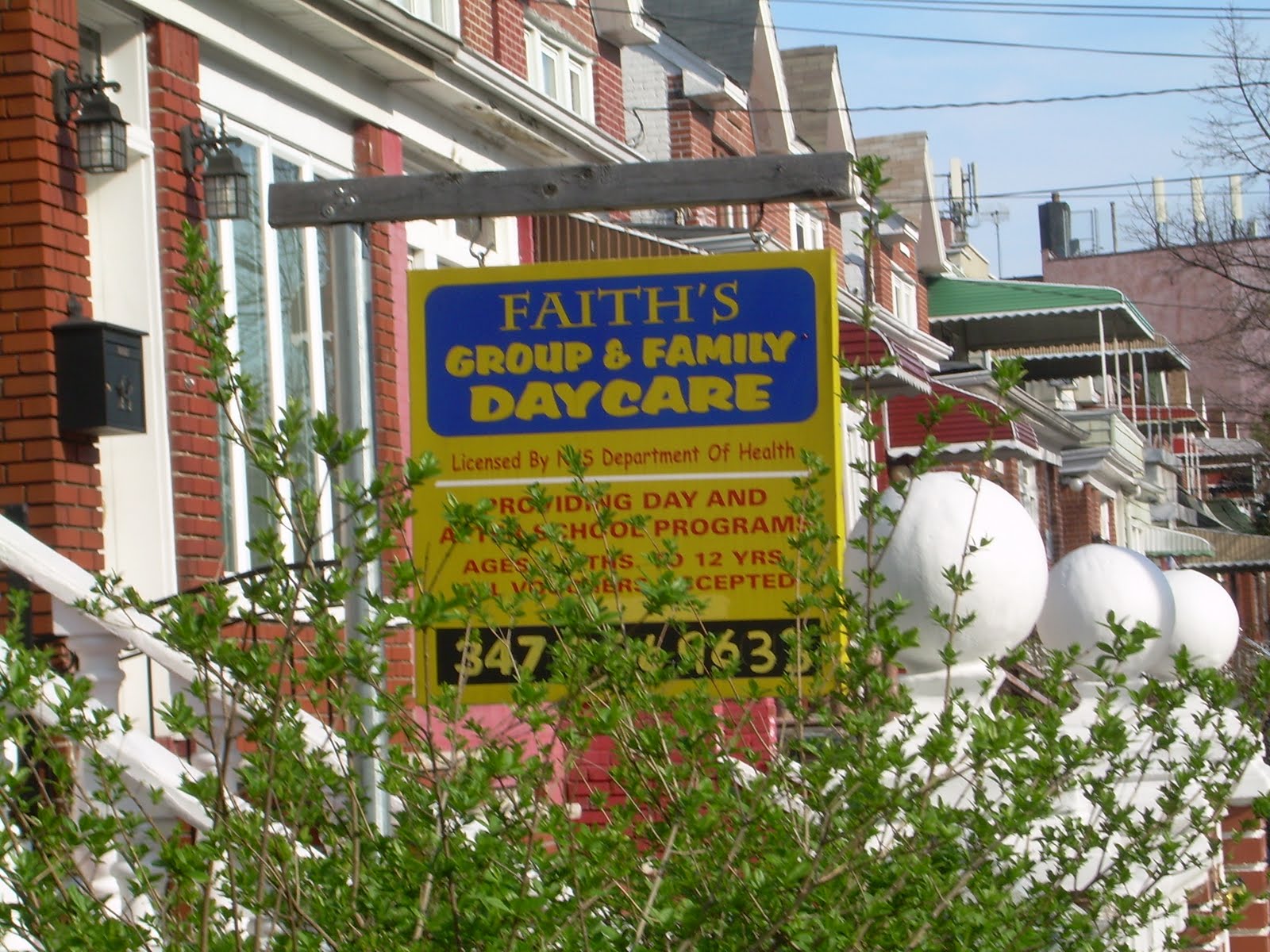
My neighborhood in Brooklyn is very much populated with mostly groups of people from a West Indian Heritage. Located in the eastern part of Brooklyn, as I walked an eight block radius for this activity, I am aware of what makes my surrounding the way it is. Less than half a block away, there is the first resource for the working parent which is a day care center that is located within the confinements of a residential home (something that is often seen in Brooklyn).
On the immediate outskirts of my apartment building, there is my church that is adjacent to a Jamaican and also a Hispanic restaurant. Turning a right corner, there is a lively unisex salon and corner store with local people hanging around and discussing the headline stories from the newspaper and sharing their interest on how the cover story affects what is currently taking place in our communities whether direct or indirectly. Right next to the store is the ever so frequently used liquor store with long lines. The laundry facility is also conveniently located with its private parking lot at front and next to it is a dance/karate center that serves as an afterschool program. In the opposite direction on the outskirts, are many other neighborhood shops and fruit/vegetable stores and as well as a money gram center for business transactions. There are a few dry cleaning stores that are very close (within two blocks of each other) that are also utilized for working parents.
I have also took notice of a small store that sells vegetarian products such as food products that are to be prepared (nothing that was sold in there were already prepared) as well as natural herbs that substitute the use of over the counter products as natural remedies. Close by are both Capital One bank and a Chase bank that are adjacent to each other as well.
As I continued walking, I observed barbershops and beauty parlors that are always flourishing with customers. I have noticed this in particular for the barbershops where the men are also paying close attention to sports on the television screen. Further at 52nd Street next to a convenient store is a huge clinic that boosts of various specialties in the areas of medicine, an indoor pharmacy and for more expediency is fact that they are also opened for business on Sunday. This medical facility is owned by an African doctor and is mostly used by all the citizens in this area as well as others and does not discriminate on cultural backgrounds and also consist of a very diverse medical staff. "American citis flourished almost solely as centers for business, and they showed it..Beyond advertising itself, business had a limited interest in decorating the public realm" (Kunstler, 33).
Question three: I am aware that city parks and restaurants are where queer/gay individuals claim spaces for themselves in New York City; however, this is seldom in my neighborhood. I think that this group of people picks these particular spaces maybe due to their rationale on open public space that is to be enjoyed by everyone.
Question four: As I have researched a “gay map of New York”, the places/spaces that are come up include bars, clubs, hotels and saunas as well as descriptions on the annual gay pride parade and so on.
Question five: The places/spaces in my neighborhood where people are engaging in “private” activities would be in night entertainment such as restaurants with bars and there is only one bar within my eight block radius walk.
Sunday, April 18, 2010
Nicole McGuire- Acitivty 8
Nicole McGuire
Activity 8
On Sunday April 11, our group went on a field trip with Group 3, first to the East Village than to a part of Brooklyn called DUMBO. The day turned out to be beautiful, with the sun shining and made the trip so much more enjoyable. Our tour guide for our group was Johanna and she showed us all different sections of her neighborhood in the East Village. Group 3’s tour guide was Maya and she showed us the more historical side of Brooklyn.
We all met at Astor Place right in front of this huge statue that moved when you pushed it. As we started walking through the East Village on St. Mark’s Place there was all these different little boutiques and shops selling little odds and ends. There were tattoo places, places to get piercings, smoke shops, and bars and restaurants all over the place. “The ballet of the good city sidewalk never repeats itself from place to place, and in any once place is always replete with new improvisations" (Jacobs, 110). Not one of the streets was alike which made it more interesting. We walked past Cooper Union College (which I never even knew existed), she showed us the only Polish Catholic Church left in New York, and took us through this park called Tompskin’s Park. During the summer, the park had a public pool which I found interesting because there are not that many public pools in NYC. The park was pretty crowded with all different types of people, and there was dog shows going on also. The park was filled with people of all ages and was actually quiet crowded because of the nice weather. Johanna showed us different community gardens, and I did not even realize they had these in NYC since I have never actually seen one. But it was so beautiful how everyone came together and uses there own ideas to make the garden unique and different. We then went to eat in this small restaurant called Tahini to eat lunch. They served different types of food such as falafels. This was the first time I ever ate a falafel, and I must say it is one of the tastiest things I have ever ate.
From there we all took the 6 Train to the last stop which is Brooklyn Bridge. We then walked over the Brooklyn Bridge to the section of DUMBO. At first I felt a little uncomfortable because there was not many people around and I was not familiar with the neighborhood. “And third, the sidewalk must have users on it fairly continuously, both to add to the number of effective eyes on the street and to induce the people in buildings along the street to watch the sidewalks in sufficient numbers.” (Jacobs, 35). Maya (who was our tour guide) informed us of different facts while walking over the bridge such as when the bridge was built and the main reasons for the bridge being built. I found it very interesting that, that part of Brooklyn used to be basically all factories and that was the main reason for the making of this bridge. As we reached Brooklyn, I started to realize that there were not too many people around. There were a lot of people walking over the bridge to Brooklyn, but I did not see any of those people as we started walking off. As we started walking through Brooklyn we passed some Project Housing. These project houses made me think of Kunstler’s idea of “frontier neighborhood” because of the project houses being in the middle of a developing area. “The kind of houses that the FHA frowned upon were those in the cities: old houses with leaky plumbing, jammed into narrow lots on crowded streets, inhabited in some cases by immigrants, or, increasingly, African-Americans” (Kunstler, 102). Because literally about 2 blocks away from the projects there was a very quiet neighborhood with homes being built as it seems. We then reached Old Fulton Street and waited in line for the Brooklyn Ice cream Factory. The line was pretty long but it was definitely worth the wait. As we were standing on line, Johanna tried to grab a chair from on of the tables so that she did not have to sit on the floor and one of the workers told her she was not allowed to move the chairs. This made me think about the movie we watched in class based on Whyte’s “The Social Life of Small Urban Spaces” about how people move chairs in different directions and spaces and how people sometimes follow.


.JPG)
I would definitely say this is going to be a field trip that I will always remember. I had such a good time with the group and experiencing different neighborhoods. I learned a lot of new things from this trip and also know different sections of NYC that I have not really spent much time in. I would really like to walk over the Brooklyn Bridge again since I do work really close to the bridge. Going on this trip also made me realize the different types of neighborhoods people live in and the different experiences they go through.
Activity 8
On Sunday April 11, our group went on a field trip with Group 3, first to the East Village than to a part of Brooklyn called DUMBO. The day turned out to be beautiful, with the sun shining and made the trip so much more enjoyable. Our tour guide for our group was Johanna and she showed us all different sections of her neighborhood in the East Village. Group 3’s tour guide was Maya and she showed us the more historical side of Brooklyn.
We all met at Astor Place right in front of this huge statue that moved when you pushed it. As we started walking through the East Village on St. Mark’s Place there was all these different little boutiques and shops selling little odds and ends. There were tattoo places, places to get piercings, smoke shops, and bars and restaurants all over the place. “The ballet of the good city sidewalk never repeats itself from place to place, and in any once place is always replete with new improvisations" (Jacobs, 110). Not one of the streets was alike which made it more interesting. We walked past Cooper Union College (which I never even knew existed), she showed us the only Polish Catholic Church left in New York, and took us through this park called Tompskin’s Park. During the summer, the park had a public pool which I found interesting because there are not that many public pools in NYC. The park was pretty crowded with all different types of people, and there was dog shows going on also. The park was filled with people of all ages and was actually quiet crowded because of the nice weather. Johanna showed us different community gardens, and I did not even realize they had these in NYC since I have never actually seen one. But it was so beautiful how everyone came together and uses there own ideas to make the garden unique and different. We then went to eat in this small restaurant called Tahini to eat lunch. They served different types of food such as falafels. This was the first time I ever ate a falafel, and I must say it is one of the tastiest things I have ever ate.
From there we all took the 6 Train to the last stop which is Brooklyn Bridge. We then walked over the Brooklyn Bridge to the section of DUMBO. At first I felt a little uncomfortable because there was not many people around and I was not familiar with the neighborhood. “And third, the sidewalk must have users on it fairly continuously, both to add to the number of effective eyes on the street and to induce the people in buildings along the street to watch the sidewalks in sufficient numbers.” (Jacobs, 35). Maya (who was our tour guide) informed us of different facts while walking over the bridge such as when the bridge was built and the main reasons for the bridge being built. I found it very interesting that, that part of Brooklyn used to be basically all factories and that was the main reason for the making of this bridge. As we reached Brooklyn, I started to realize that there were not too many people around. There were a lot of people walking over the bridge to Brooklyn, but I did not see any of those people as we started walking off. As we started walking through Brooklyn we passed some Project Housing. These project houses made me think of Kunstler’s idea of “frontier neighborhood” because of the project houses being in the middle of a developing area. “The kind of houses that the FHA frowned upon were those in the cities: old houses with leaky plumbing, jammed into narrow lots on crowded streets, inhabited in some cases by immigrants, or, increasingly, African-Americans” (Kunstler, 102). Because literally about 2 blocks away from the projects there was a very quiet neighborhood with homes being built as it seems. We then reached Old Fulton Street and waited in line for the Brooklyn Ice cream Factory. The line was pretty long but it was definitely worth the wait. As we were standing on line, Johanna tried to grab a chair from on of the tables so that she did not have to sit on the floor and one of the workers told her she was not allowed to move the chairs. This made me think about the movie we watched in class based on Whyte’s “The Social Life of Small Urban Spaces” about how people move chairs in different directions and spaces and how people sometimes follow.


.JPG)
I would definitely say this is going to be a field trip that I will always remember. I had such a good time with the group and experiencing different neighborhoods. I learned a lot of new things from this trip and also know different sections of NYC that I have not really spent much time in. I would really like to walk over the Brooklyn Bridge again since I do work really close to the bridge. Going on this trip also made me realize the different types of neighborhoods people live in and the different experiences they go through.
Subscribe to:
Comments (Atom)